
By George Planeta
Director of Business Development
Six Maritime, Inc.
A False Sense of Security
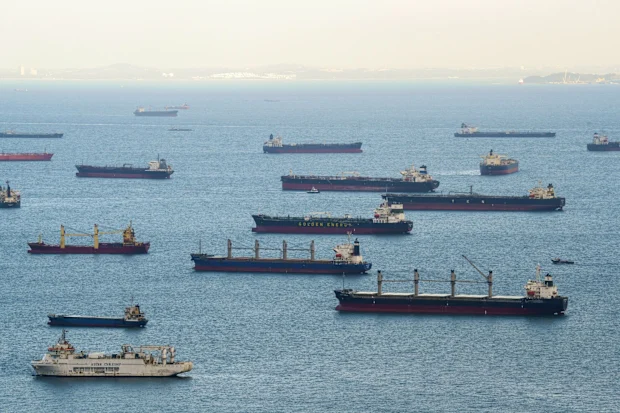
Image: Maritime Approaches to a Commercial Port, Source: AFR (image credit unknown)
There is a quiet assumption embedded in how many ports and shipyards approach security today: that the systems and procedures that have worked for years will continue to hold as the environment around them evolves. It is not an unreasonable position. Maritime security, particularly in U.S. Naval and industrial settings, has been built on disciplined execution, layered controls, and a culture that prioritizes reliability above all else. That foundation has served the industry well and it continues to do so. However, the conditions surrounding that foundation are changing, and they are changing faster than most organizations are structured to absorb.
For decades, maritime security has been oriented around controlling access, maintaining visibility, and responding to known categories of threat. The model has been effective because the threat has largely conformed to expectations. Suspicious activity was identifiable. Intrusions were detectable. The operating environment, while complex, behaved within a set of understood patterns. That is no longer the case.
A Changing Threat Environment
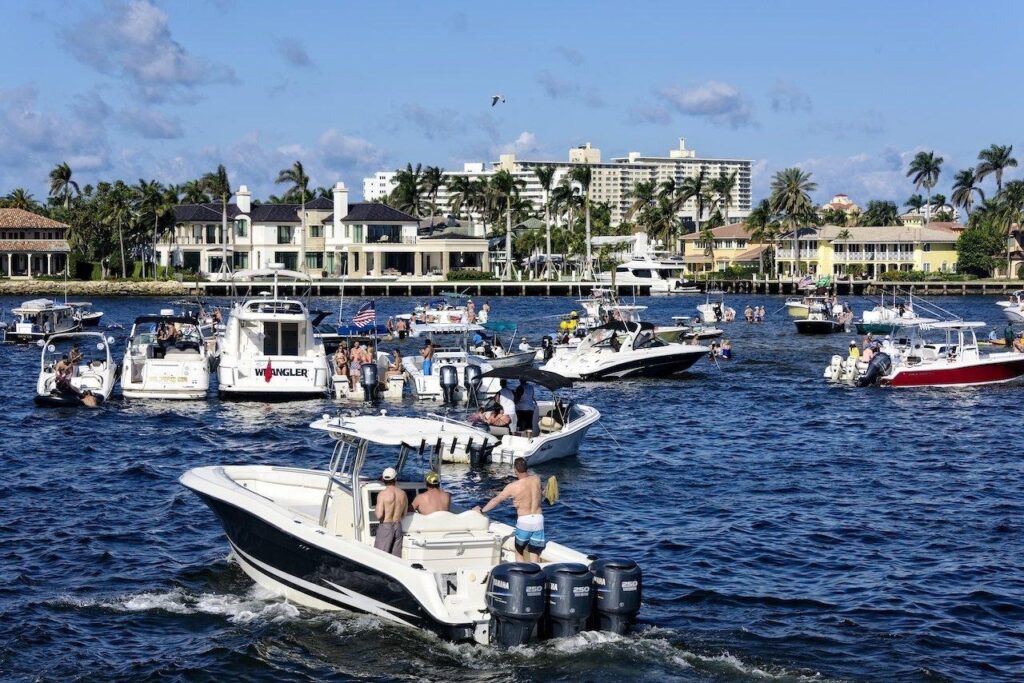
Image: Congested Small Vessel Traffic in Confined Waterways, Source: Duncan Seawall Blog
Over the past several years, much of the public discussion around emerging threats has centered on aerial systems. That focus is justified, but it has also narrowed the aperture. On the water, a parallel shift has been taking place, one that is less visible but no less significant.
Unmanned and low-profile surface systems are no longer limited to well-funded programs or specialized applications. The technology has matured, and access to it has expanded. Capabilities that once required significant investment are now available at a fraction of the cost, often built on commercial components and supported by rapidly advancing navigation and control systems.
In isolation, none of this appears particularly disruptive. Small vessels have always been part of the maritime environment. Commercial traffic, recreational craft, and service vessels move through ports and waterways every day. The challenge emerges in how these new systems fit into that existing picture. They do not announce themselves.
A low-profile vessel traveling at slow speed, following a plausible route, can blend into normal traffic patterns with little difficulty. Its signature may not trigger immediate concern. Its behavior may not deviate enough from the norm to justify intervention, at least not without context. By the time that context is fully understood, the window for action may have narrowed considerably.
Current security measures remain effective within the conditions they were designed for. The issue is that those conditions are changing.
Technology and Its Momentum
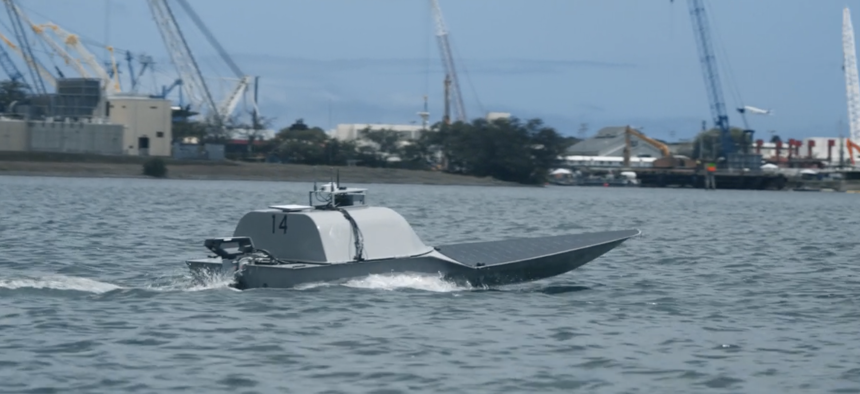
Image: Autonomous Surface Vessel in Harbor Environment, Source: DefenseOne
The industry has not been idle in the face of these developments. There has been a clear and accelerating push toward incorporating new technologies into maritime security architectures. Autonomous platforms, advanced sensors, and increasingly sophisticated data analytics are being introduced across both the commercial and defense sectors.
There is a sense of momentum behind these efforts, and in many respects, that momentum is warranted. The ability to extend awareness beyond traditional boundaries, to monitor larger areas with fewer personnel, and to maintain persistent presence in key locations represents a meaningful shift in capability. It is also where much of the current conversation begins, and unfortunately, often ends.
The focus tends to center on what the technology can do. Range, endurance, sensor performance, data throughput. These are important considerations, and they are frequently used as the basis for evaluating solutions. But they do not fully capture how those solutions perform once they are placed into a real-world maritime environment. That distinction matters more than it might initially appear.
The Integration Problem
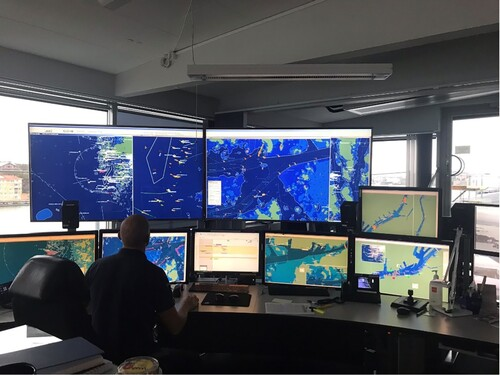
Image: Maritime Operations Center Monitoring Harbor Activity
Source: https://www.tandfonline.com/doi/full/10.1080/01441647.2025.2569578
Ports and shipyards are not environments where new capabilities can be introduced in isolation. They are tightly coupled systems where operations, safety, security, and commercial activity intersect. Any change to one part of that system has the potential to affect the others.
An autonomous platform operating in a controlled demonstration may perform exactly as intended. That same platform deployed in a congested harbor, alongside commercial traffic, under the constraints of regulatory oversight and operational tempo, is subject to a different set of variables. The focus has shifted from proving the system works to understanding how it operates within the broader environment.
An alert generated by a sensor must be interpreted in context. A contact identified as anomalous must be evaluated against known patterns of activity. A response must be initiated in a way that aligns with both security objectives and operational constraints. Each of these steps requires coordination, judgment, and an understanding of the environment that extends beyond what the system itself can provide. Without that integration, even the most capable technology risks becoming disconnected from the outcome it is intended to support.
Where Operations Still Matter
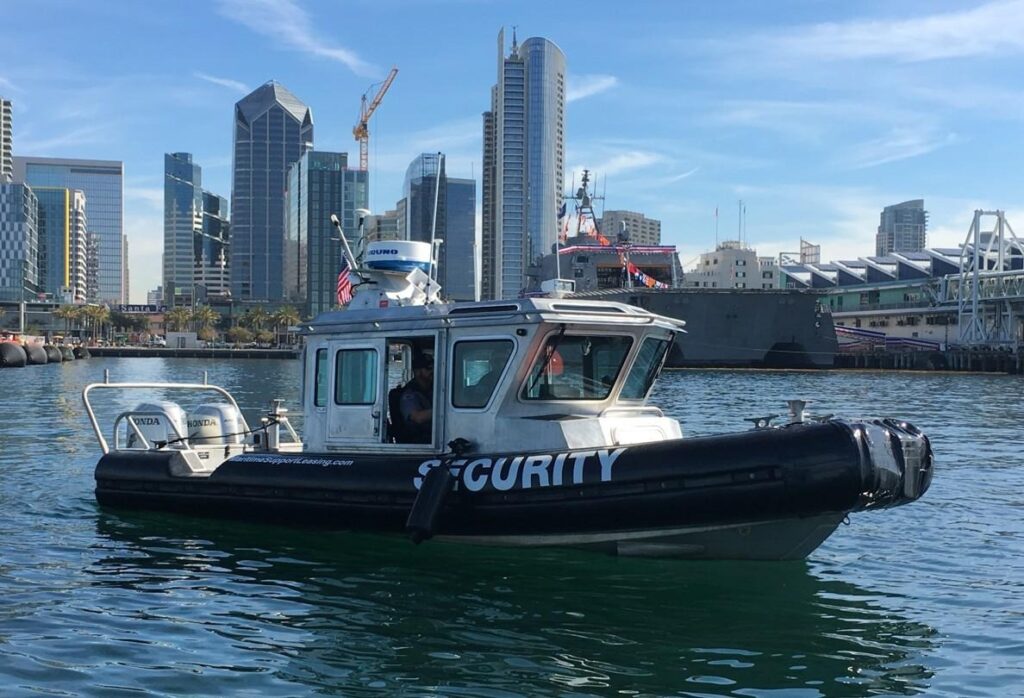
Image: Waterborne Security Operations in a Naval Vessel Protection Zone, Source: Six Maritime, Inc.
Maritime security has always been, at its core, an operational discipline. It is built on the ability to observe, interpret, and act within a dynamic environment. Procedures are developed to provide consistency, but execution depends on the individuals responsible for carrying them out. In practice, this is where most systems succeed or fail, at the point where observation must translate into action.
Experience plays a significant role in that process. The ability to recognize when something is out of place, even when it does not immediately appear to be a threat, is often the product of time spent in that environment. It is informed by an understanding of how the port functions on a typical day, how vessels move, how crews behave, and how small deviations can signal larger issues. These are not elements that can be easily codified.
Autonomous systems bring advantages that are difficult to replicate with human operators alone. They can remain on station for extended periods, monitor multiple areas simultaneously, and provide a level of persistence that enhances overall awareness. That contribution is meaningful, particularly in environments where gaps in coverage create opportunities for exploitation.
At the same time, the interpretation of what those systems observe remains a human function. The ability to assess intent, to weigh competing signals, and to make decisions in uncertain conditions is not something that can be fully delegated. The relationship between human operators and autonomous systems is not a matter of replacement. It is a matter of alignment.
Extending the Security Envelope
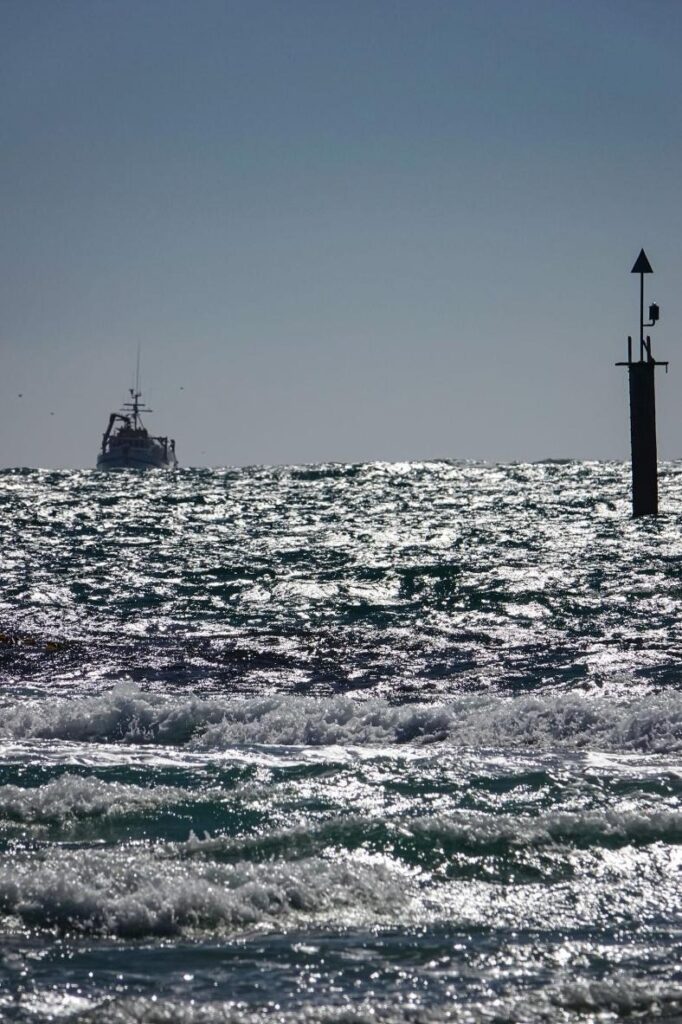
Image: Distant Vessel Operating Along a Maritime Approach, Source: Public Domain
One of the more significant shifts enabled by emerging technology is the ability to extend awareness beyond the immediate vicinity of the asset being protected. Traditional models have emphasized securing a defined perimeter, with detection and response occurring within that boundary. That approach has limitations, particularly when dealing with threats that are designed to exploit proximity and timing.
By extending detection outward, it becomes possible to gain earlier visibility into activity that may warrant attention. Autonomous systems utilized as forward elements can provide indication of movement patterns, identify contacts of interest, and contribute to a more complete picture of the environment. This does not eliminate the need for perimeter security. It changes how that perimeter is supported.
With earlier awareness comes the opportunity for more deliberate decision-making. Instead of reacting to an intrusion at close range, operators can evaluate developing situations with greater context and time. That shift, while subtle, has meaningful implications for how security is executed.
In practical terms, this means identifying activity earlier in the approach, assessing it before it becomes time-sensitive, and maintaining options that are no longer available once a vessel is inside the immediate security zone.
Balancing Adoption and Execution
There is a natural inclination to move quickly when new capabilities become available. The pressure to modernize, to remain competitive, and to address emerging threats creates momentum that can be difficult to temper. At the same time, the consequences of introducing systems that are not fully integrated can be significant. Too many alerts and operators begin to filter them out. Too little confidence in the system and it becomes underutilized. Misalignment with operational requirements and it introduces friction rather than reducing it.
Finding the right balance requires a measured approach. It requires testing in environments that reflect real conditions, not idealized scenarios. It requires input from the personnel who will ultimately be responsible for using the system and a willingness to adjust both the technology and the procedures that surround it. This process takes time, but it also produces results that are far more durable.
Bridging the Gap
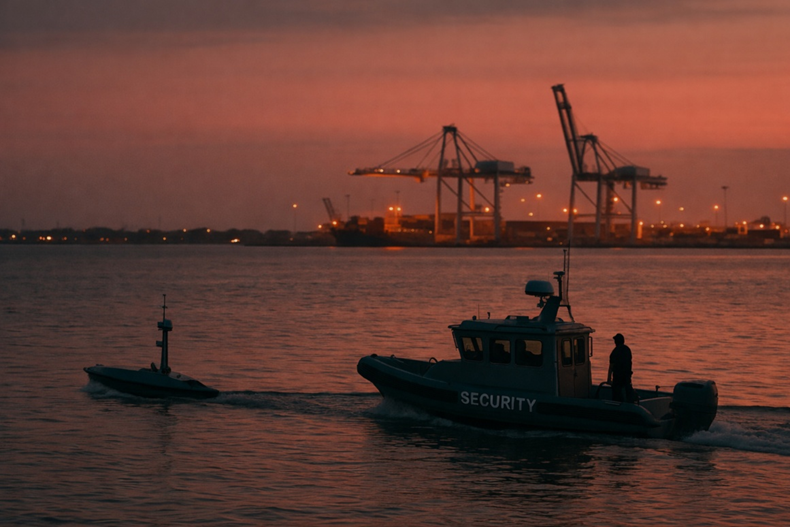
Image: Manned and Unmanned Systems Operating in Coordination, Source: Six Maritime, Inc.
The path forward is not defined by choosing between existing security frameworks and emerging technologies. It is defined by the ability to bring them together in a way that strengthens both. Organizations that are successful in this space tend to approach the problem from an operational perspective first. They begin with an understanding of how their environment functions, where their vulnerabilities lie, and what outcomes they are trying to achieve. Technology is then introduced as a means of supporting those outcomes, rather than as an end in itself.
This approach requires close collaboration between those developing new capabilities and those responsible for executing security on a daily basis. It requires a shared understanding of what success looks like, and a willingness to iterate as that understanding evolves.
It also requires discipline. Not every capability needs to be adopted immediately. Not every system will be a fit for every environment. The ability to evaluate, select, and integrate the right combination of tools is what ultimately defines effectiveness.
The Way Ahead
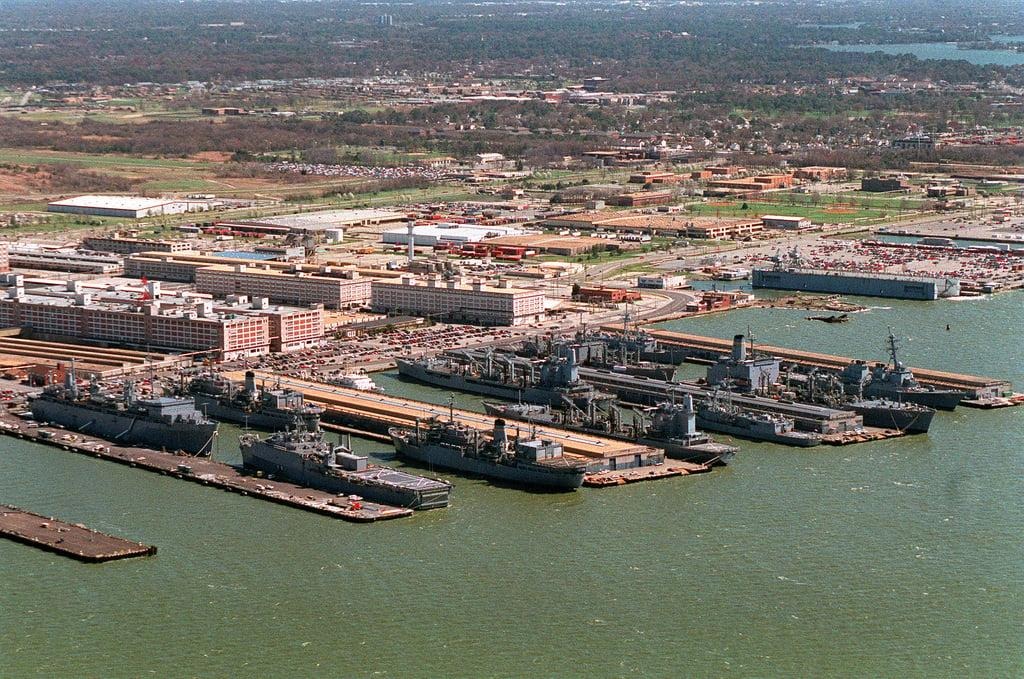
Image: Large-Scale Naval Infrastructure in a Maritime Environment, Source: US Navy
Maritime security is entering a period of transition. The tools available are changing, the threats being addressed are evolving, and the expectations placed on those responsible for securing critical infrastructure continue to increase. What has not changed is the need for security to function in the real world.
Ports remain busy. Shipyards remain complex. Operations continue regardless of the systems that are introduced to support them. Any solution that does not account for that reality will struggle to deliver the outcomes it promises.
The next layer of maritime security will take shape through the integration of new capabilities into these existing environments. It will rely on autonomy, but it will not be defined by it. It will depend on human expertise, but it will be enhanced by the tools now available. The organizations that navigate this transition effectively will be those that understand the distinction between capability and application. They will recognize that technology provides options, but execution determines results.
That understanding is what will separate systems that look promising from those that perform when it matters. In maritime security, outcomes are measured in real time, under real conditions. The organizations that recognize that early will be the ones best positioned to manage what comes next.