
George Planeta
Director of Business Development
Six Maritime, Inc.
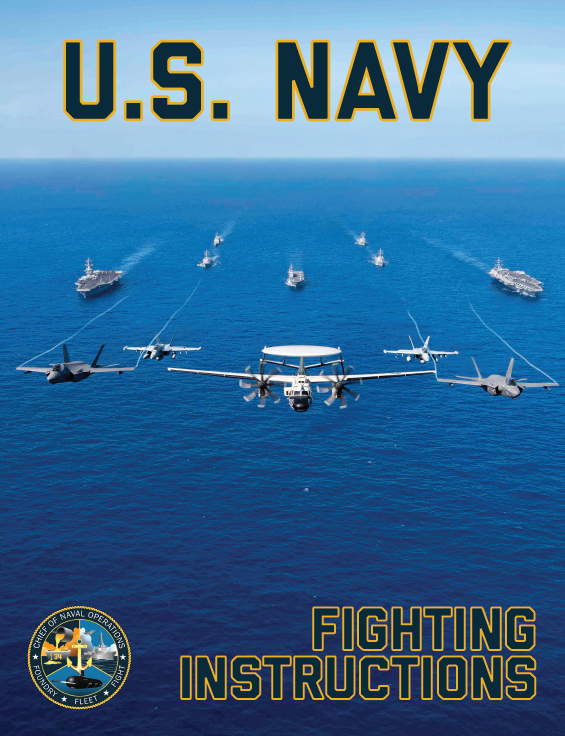
The Chief of Naval Operations’ Fighting Instructions are not ceremonial guidance. They are directional. They reflect a Navy that understands the strategic environment has shifted and that tempo, accountability, and operational execution must adjust accordingly.
The message is clear: the Navy exists to generate combat credibility and win at sea. Culture, infrastructure, acquisition, and modernization efforts must support that purpose. In a period defined by renewed maritime competition, the margin for institutional drag is narrow.
For those operating along the waterfront and inside the broader maritime enterprise, the implications extend beyond the fleet itself.
Warfighting as the Organizing Framework
The Fighting Instructions’ structure, Sailors, Foundry, Fleet, Fight, reinforces a foundational point. The Fleet delivers combat power, but that power is generated and sustained by an interconnected system. Shipyards, maintenance facilities, infrastructure, technology developers, and security frameworks are not peripheral to warfighting. They shape its endurance. The Navy’s ability to “mass fires quickly” and sustain operations across domains depends on more than platforms underway. It depends on readiness generated pier-side, on industrial resilience, and on systems that function reliably under operational conditions.
Peer competitors are modernizing at pace. They are investing in distributed maritime capability, autonomous systems, and infrastructure designed for contested environments. The CNO’s emphasis on tempo and execution reflects that reality. If the Fleet is directed to operate faster and with greater lethality, the supporting ecosystem must assess whether it is built to keep up.
Converting Innovation Into Lethality
One of the most consequential lines in the document is the directive to “convert innovation into lethality.” That statement carries operational weight. Innovation is not measured by prototypes or demonstrations. It is measured by its contribution to combat effectiveness.
The Fighting Instructions further state that the Navy will “decrease risk in operationalizing new technology by accepting risks in rapid acquisitions,” and that dedicated adoption task forces will ensure new capabilities land “in the hands of Sailors who understand how to use them.”
Rapid acquisition alone does not create advantage. Operationalizing technology does. That requires systems to function in live maritime environments, integrated into existing workflows, alongside trained operators who understand mission demands.One of the most consequential lines in the document is the directive to “convert innovation into lethality.” That statement carries operational weight. Innovation is not measured by prototypes or demonstrations. It is measured by its contribution to combat effectiveness.
The Fighting Instructions further state that the Navy will “decrease risk in operationalizing new technology by accepting risks in rapid acquisitions,” and that dedicated adoption task forces will ensure new capabilities land “in the hands of Sailors who understand how to use them.”
Rapid acquisition alone does not create advantage. Operationalizing technology does. That requires systems to function in live maritime environments, integrated into existing workflows, alongside trained operators who understand mission demands.
Autonomy is central to this discussion.
Unmanned surface vessels, AI-enabled sensing, distributed maritime domain awareness platforms, and automated decision-support tools are no longer conceptual. They are available, maturing, and increasingly accessible. The question is not whether autonomy will shape maritime operations. The question is how effectively it will be integrated.
The document makes an important point: “Fleet adoption processes must include our Fleets as essential partners during development and integration.”
That is where advantage will be determined.
Autonomy developed adjacent to the Fleet, in controlled environments, isolated test ranges, or vendor demonstrations, risks creating parallel systems that complicate operations rather than enhance them. Autonomy integrated inside live operational conditions, shaped by Fleet input, and refined through iterative use contributes directly to lethality and resilience.
The difference is discipline.
The Waterfront as an Operational Environment
Distributed Maritime Operations expand the battlespace. Logistics nodes, maintenance facilities, and waterfront infrastructure are no longer assumed to sit outside operational reach. They are part of the maritime picture.
Shipyards generate readiness. Maintenance facilities restore combat power. Waterfront security protects assets that represent national investment and deterrence credibility. Disruption at those nodes has operational consequence.
As the Navy pursues expanded maritime maneuver, leveraging “traditional and non-traditional attack vectors”, the enterprise that sustains it must evolve in parallel. Autonomous maritime systems have clear relevance in this space. Persistent unmanned surface patrols, AI-assisted anomaly detection, sensor fusion across waterfront zones, and distributed domain awareness platforms can extend visibility and reduce response timelines. But their value depends on how they are paired with human operators, integrated into command structures, and tested under realistic constraints.
The maritime environment exposes weaknesses quickly. Sea state, traffic density, communications interference, and weather conditions do not accommodate theoretical performance. Systems must operate inside vessel protection zones, in congested waterways, and within the tempo of real-world port activity.
That is where integration moves from concept to capability.
Speed and Integration Discipline
The Fighting Instructions place sustained emphasis on tempo. The Navy intends to move faster in fielding and adopting new capabilities. Speed without integration discipline creates friction. Integration without urgency creates stagnation.
Balancing those forces requires environments where technology is evaluated in operational context, where operators provide feedback early, and where security, sustainment, and modernization efforts are aligned rather than sequential. Autonomy must support Sailors, not burden them. Systems must reduce cognitive load, extend awareness, and enable faster decision cycles. That only occurs when human-machine pairing is deliberate and tested under pressure.
The maritime enterprise should not interpret this modernization push as isolated to fleet platforms. The integration of autonomy into force protection, waterfront security, maintenance support, logistics monitoring, and distributed operations will shape readiness in measurable ways.
Innovation becomes lethality when it functions reliably in the operational picture.
Where This Is Heading
The CNO’s Fighting Instructions are part of a broader shift toward accountability, measurable readiness, and distributed capability. We should expect continued emphasis on autonomy, rapid adoption, and Fleet involvement in development.
For the broader maritime ecosystem, that direction presents both responsibility and opportunity. Organizations operating along the waterfront and inside the industrial base will increasingly be evaluated on their ability to:
- Support accelerated integration of emerging technology.
- Maintain security postures aligned with contested realities.
- Reduce friction between acquisition and operational use.
- Pair technological capability with experienced operators.
Warfighting alignment is achieved through structure and execution. It shows up in how systems are fielded, how facilities are secured, and how quickly capability transitions from concept to sustained use.
If the Navy is serious about accelerating autonomy and distributed capability, then the maritime enterprise has to build integration environments that mirror real-world conditions. The Fleet has been given its direction. The supporting ecosystem now has to execute with the same clarity.