
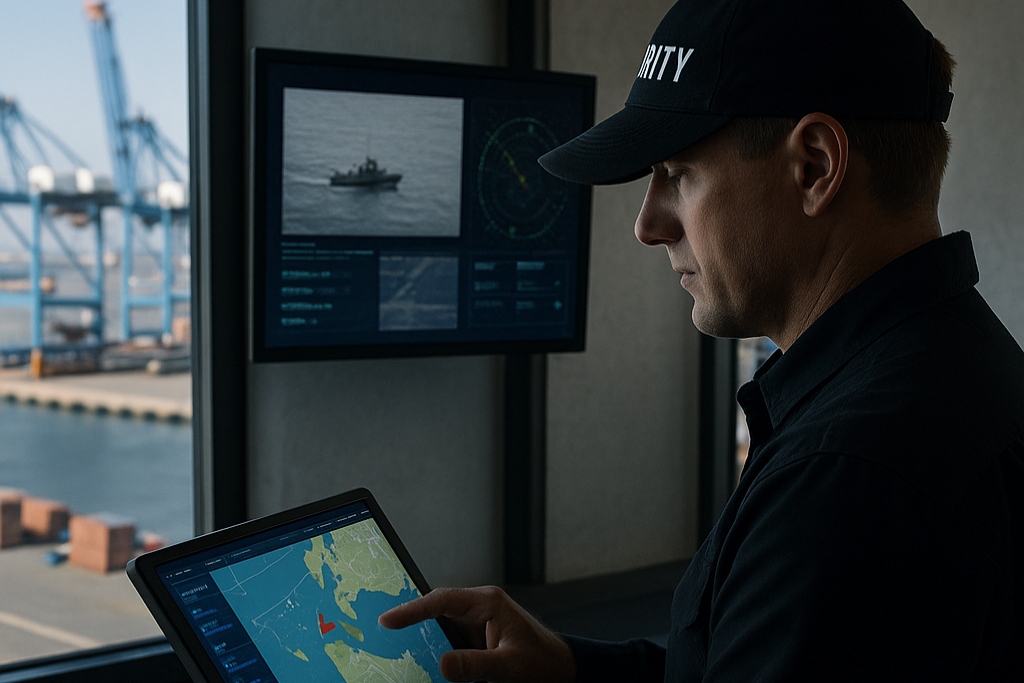
The 2025 National Security Strategy ends with a simple premise: America’s security will be shaped not by any single technology, policy, or platform, but by our ability to integrate them coherently. The future belongs to organizations that can translate national-level priorities into operational reality at the deckplate level.
For the maritime sector, particularly private shipyards supporting naval readiness, this integration is not abstract. It’s urgent.
The NSS lays out the components of a modernized maritime defense ecosystem: resilient industrial infrastructure, expanded workforce capability, autonomous systems, AI-enabled sensing, multi-domain logistics, and new public–private frameworks that allow innovation to be fielded at speed. But nowhere does it specify how these elements come together into something usable.
That challenge is left to industry.
At Six Maritime, we view this moment not as an inflection point, but as the beginning of a decade-long transition. One that requires bridge-builders, companies capable of standing firmly in the realities of today’s security environment while engineering the operational concepts of tomorrow.
The shipyards we protect, the research programs we support, and the R&D events we execute show us a clear truth: autonomous systems, AI, and enhanced sensing are not replacing traditional maritime security, they’re amplifying it. They extend the range of human judgment. They strengthen deterrence by increasing visibility. They modernize posture without replacing the people whose expertise anchors readiness.
But none of this happens spontaneously. It requires deliberate pairing: human operators with autonomous tools, traditional guard force frameworks with modern detection ecosystems, legacy shipyard environments with emerging technologies whose value depends on skilled integration.
This is where Six Maritime has quietly positioned itself.
While the NSS outlines national priorities, Six Maritime’s internal roadmap, puts them into action:
- Building a��tech-integration narrative that pairs human maritime professionals with USVs, aerial sensors, and AI-enabled MDA platforms.
- Developing operational testbeds for emerging unmanned systems, an area where competing firms are already pushing concepts, accelerating the urgency to lead from the front.
- Creating business development pathways into shipyards, coastal installations, critical infrastructure, and R&D programs across the U.S.
- And leveraging these capabilities to build a future that expands capacity and positions Six Maritime as the operational integrator for an entire new generation of maritime technologies.
In other words, the NSS sets the direction. Our job is to design the execution.
If the last decade of maritime security was defined by compliance, labor shortages, and incremental modernization, the next decade will be shaped by integration, integration of sensors, platforms, data streams, autonomous systems, and human expertise. The organizations that thrive will be those that can fuse these capabilities into a coherent operational posture that keeps naval assets, commercial infrastructure, and coastal facilities secure under any condition. Six Maritime intends to be one of them.
Not simply by offering security services, but by shaping how maritime security is conceived, deployed, and delivered across the country. By building partnerships with autonomous system developers. By testing technologies that the NSS envisions but has not yet operationalized. By preparing the workforce not just for today’s duties but for tomorrow’s tools. And by creating the connective tissue between strategy and practice.
The 2025 National Security Strategy provides a vision. Six Maritime is building the playbook that makes it real.